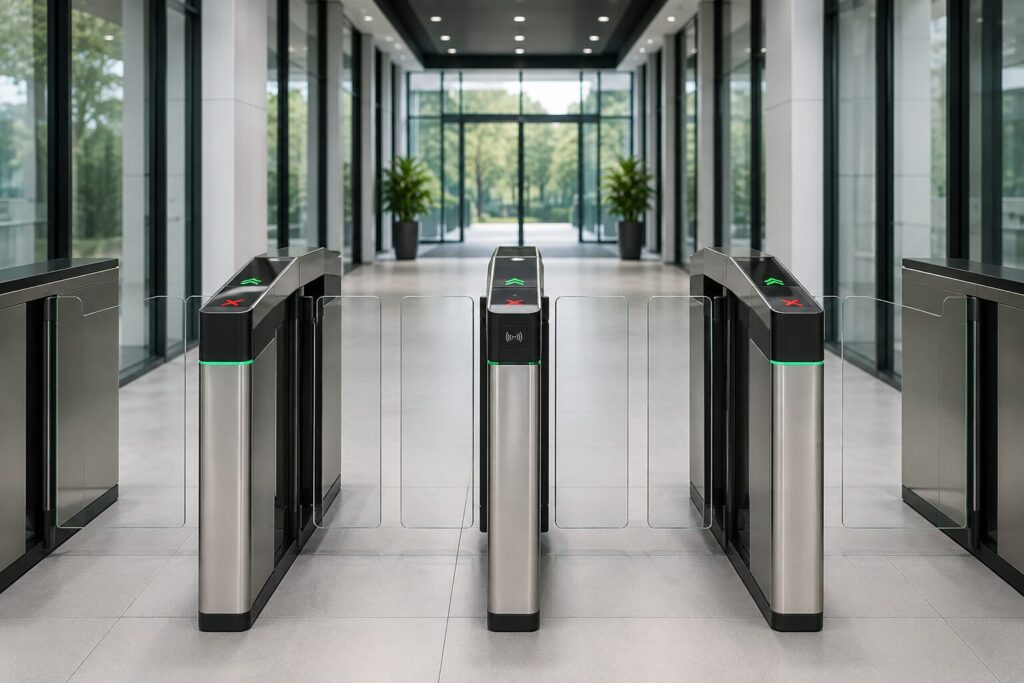
An Access Control Management System is a critical security solution that enables organizations to control, monitor, and manage access to buildings, rooms, restricted areas, elevators, parking facilities, and other secured locations. Modern access control systems replace traditional lock-and-key mechanisms with intelligent electronic security technologies that provide better control, visibility, accountability, and security.
HEYCE provides advanced Access Control Management System solutions that combine biometric authentication, RFID credentials, PIN verification, and centralized management software to help organizations improve security while simplifying access management.
What is an Access Control Management System?
An Access Control Management System is a security solution that determines who is allowed to enter specific areas, when they are allowed access, and under what conditions access is granted.
Unlike traditional locks and keys, electronic access control systems provide:
- Centralized access management
- Real-time monitoring
- User activity logging
- Access reporting
- Security alerts
- Remote administration
These capabilities allow organizations to maintain greater control over their facilities while improving security and operational efficiency.
How an Access Control Management System Works
When a user presents a credential to an access control reader, the reader transmits the credential information to a door controller or control panel.
The system then:
- Verifies the credential
- Checks access permissions
- Grants or denies access
- Records the transaction
- Generates alerts if required
If access is approved, the locking mechanism is released for a predefined period. If access is denied, the door remains locked and the event is recorded within the system database.
Advanced systems can also trigger:
- SMS alerts
- Email notifications
- Sirens
- Photo capture
- Video recording
- Security incident reports
Authentication Methods in Access Control Systems
Modern Access Control Management Systems support multiple authentication methods.
Knowledge-Based Authentication
Something the user knows:
- PIN codes
- Passwords
- Passphrases
Possession-Based Authentication
Something the user possesses:
- RFID cards
- Smart cards
- Key fobs
Biometric Authentication
Something the user is:
- Face recognition
- Fingerprint recognition
- Iris recognition
- Palm recognition
- Vein recognition
- Voice recognition
Organizations can use single-factor or multi-factor authentication for enhanced security.
Main Components of an Access Control Management System
Access Control Readers
Access control readers authenticate users through:
- RFID cards
- Biometrics
- PIN codes
Door Controllers
Door controllers act as the intelligence behind the system by validating credentials and controlling access permissions.
Locking Mechanisms
Supported locking devices include:
- Electromagnetic locks
- Electric strike locks
- Magnetic locks
- Motorized locks
Battery Backup Systems
Uninterruptible Power Supply (UPS) systems ensure continued operation during power failures.
Exit Devices
Including:
- Push-to-exit buttons
- Touchless exit switches
- Emergency break-glass units
- Key override switches
Access Control Software
Centralized software provides:
- User management
- Attendance integration
- Reporting
- Audit trails
- Security administration
Benefits of Access Control Management Systems
Enhanced Security
Only authorized personnel can access protected areas.
Complete Audit Trails
Every access attempt is recorded and stored for future reference.
Centralized Management
Manage multiple locations from a single platform.
Reduced Key Management
Eliminate the challenges associated with physical key distribution.
Real-Time Monitoring
Security personnel can monitor access events as they occur.
Improved Compliance
Detailed reports support regulatory and security compliance requirements.
Scalable Architecture
Easily expand the system as business requirements grow.
Access Control Management Applications
The HEYCE Access Control Management System is suitable for:
- Corporate offices
- Residential communities
- Industrial facilities
- Warehouses
- Educational institutions
- Healthcare facilities
- Government organizations
- Hotels
- Retail stores
- Data centers
Its flexibility allows organizations to implement customized access policies based on operational requirements.
Advanced Features of Modern Access Control Systems
Modern access control technologies provide powerful capabilities such as:
- Cloud-based management
- Face recognition access
- Visitor management
- Elevator access control
- Time attendance integration
- Multi-site management
- Anti-passback functionality
These features improve both security and operational efficiency.
Integration with Other Security Systems
HEYCE Access Control Management Systems can integrate with:
- CCTV surveillance systems
- Time attendance systems
- Visitor management systems
- Alarm systems
- Building management systems
- Fire alarm systems
This creates a unified security platform that improves visibility and incident response.
Why Choose HEYCE Access Control Management Solutions?
HEYCE provides complete access control solutions including:
- System design
- Equipment supply
- Installation
- Configuration
- Software deployment
- Maintenance and support
Our solutions utilize industry-leading technologies to deliver secure, scalable, and reliable access control management for organizations of all sizes.
Conclusion
The Access Control Management System from HEYCE provides organizations with a powerful solution for securing facilities, controlling access, monitoring user activity, and improving operational efficiency. By combining intelligent authentication methods, centralized software management, and advanced security features, businesses can create a safer and more secure environment for employees, visitors, and assets.